
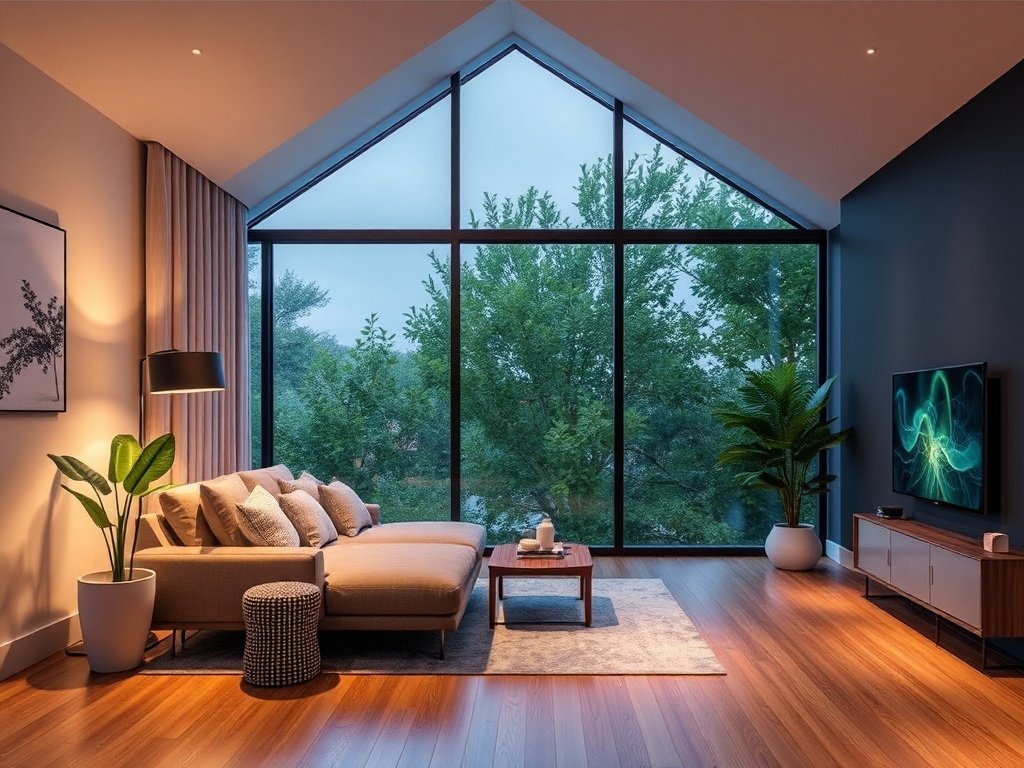
Insetprag is emerging as a new benchmark in smart home design, blending elegant hardware, adaptive software, and user-centered experiences to create homes that are more comfortable, efficient, and future-ready. Whether you’re upgrading a single room or planning a whole-house installation, Insetprag’s principles and product approach set a practical, design-forward path for modern living.
What is Insetprag?
Insetprag refers to an integrated approach to smart home design that prioritizes invisible technology, interoperability, and sustainability. Rather than imposing visible gadgets or fragmented apps, Insetprag emphasizes systems that are “inset” into the home — discreet, reliable, and context-aware. Key facets include modular hardware, cross-platform compatibility, privacy-first data practices, and automation that adapts to homeowner routines.
Why Insetprag Matters
- Better daily living: Well-designed automation reduces friction for routine tasks — lighting, climate, security, and entertainment — letting homeowners focus on living instead of managing devices.
- Long-term value: Systems built around modularity and standards are easier to upgrade, reducing obsolescence and protecting investment.
- Energy and sustainability: Intelligent coordination of HVAC, lighting, and appliances can produce measurable energy savings and enable greener living.
- Enhanced privacy and security: A design-first approach embeds secure defaults and transparent data handling, giving users control over what is shared and when.
Core Principles of Insetprag Design
Invisible Integration
Insetprag favors devices and interfaces that blend with architecture and interior design: recessed smart light fixtures, in-wall controllers, and voice/gesture controls that remove clutter and visible tech overload.
Interoperability
An Insetprag system supports open standards (Matter, Thread, Zigbee, Z-Wave, Bluetooth LE) and cloud-agnostic operation so devices from multiple manufacturers work together reliably.
Contextual Intelligence
Instead of fixed schedules, Insetprag leverages contextual signals (occupancy, local weather, utility rates, user preferences) to make smarter decisions and reduce manual interventions.
Modular Upgradability
Hardware is designed as replaceable modules or bridge nodes. When a new standard or feature arrives, homeowners can swap components rather than overhaul the entire system.
Privacy-First Architecture
Local processing, minimal cloud dependency, and clear user consent paths ensure personal data remains private and under homeowner control.
Key Features and Benefits
- Seamless Automation: Use case-driven automations like “Away Mode” that lowers HVAC, arms security, and redirects energy to battery storage when residents leave.
- Unified Control Layer: A single app or control surface (with fallback physical controls) reduces cognitive load and avoids juggling multiple vendor apps.
- Adaptive Lighting and Acoustics: Tunable white and circadian lighting schedules integrated with acoustic modulation improve sleep, productivity, and mood.
- Integrated Energy Management: Real-time energy dashboards, load shifting, and smart EV charging lower energy bills and support grid resilience.
- Accessible Design: Voice-first interactions, tactile in-wall controls, and customizable interfaces make smart homes inclusive for all ages and abilities.
- Resilience and Offline Mode: Local automation hubs ensure critical functions operate without internet access for added safety and reliability.
Real-World Use Cases
- Morning Routine: Insetprag detects when you wake, gradually ramps bedroom lighting to mimic sunrise, preheats coffee, and queues your preferred news briefing — all tailored to weekdays or weekends.
- Home Office Mode: The system optimizes lighting, reduces background noise through smart acoustic dampening, and prioritizes network bandwidth for video conferencing.
- Energy Spike Management: During utility peak pricing, Insetprag temporarily shifts nonessential loads, pre-cools the home, and schedules EV charging for off-peak hours.
- Secure Vacation Mode: Motion patterns are simulated, interior lights activate on randomized schedules, and cameras run enhanced recording while local storage keeps footage private.
Design and Installation Best Practices
- Plan at design phase: For new builds, integrate wiring, in-wall devices, and network backbone from the start.
- Hybrid approach for retrofits: Combine wireless standards with targeted wired upgrades (Ethernet backhaul, PoE lighting) to get the best performance.
- Centralized but distributed architecture: Use a local automation hub for latency-sensitive tasks and cloud services for remote access and analytics.
- Prioritize future-proof standards: Choose devices and gateways that support Matter and Thread to maximize compatibility and longevity.
- Professional commissioning: After installation, commission automations and sensors to ensure reliable triggers and avoid false positives.
Common Objections and How to Address Them
- Cost concerns: Emphasize modular upgrades and energy savings; present total cost of ownership comparisons showing payback from energy and convenience.
- Complexity: Offer managed installation packages or a staged rollout plan starting with core rooms (kitchen, living room, master bedroom).
- Vendor lock-in fears: Promote Matter-compatible devices and cloud-optional solutions to minimize dependency on single vendors.
- Privacy worries: Clearly document local processing capabilities, data retention policies, and user consent flows.
Sample Call to Action (CTA)
Want to see how Insetprag could transform your home? Start with a free design consult — we’ll map a phased plan for integrating smart lighting, HVAC, and energy management that fits your budget and lifestyle.
Conclusion
Insetprag represents a pragmatic evolution of smart home design: less about novelty gadgets and more about thoughtful, interoperable systems that improve daily living, save energy, and respect privacy. By choosing modular, standards-based approaches and focusing on context-aware automation, homeowners can build resilient, beautiful, and future-ready living spaces.
Frequently Asked Questions (FAQs) — Insetprag
What is Insetprag?
Insetprag is an integrated smart home design approach that emphasizes invisible technology, interoperability, modular upgradability, and privacy-first architecture. It focuses on embedding smart functionality into the home’s structure so devices work seamlessly together and remain future-proof.
How does Insetprag differ from other smart home systems?
Unlike ad-hoc smart setups that rely on visible gadgets and multiple vendor apps, Insetprag prioritizes in-wall/ recessed devices, open standards (Matter, Thread, Zigbee, Z-Wave), local automation hubs, and modular components to reduce obsolescence and improve reliability.
Is Insetprag compatible with my existing smart devices?
Insetprag is designed around interoperability. Devices that support open standards like Matter and Thread will generally be compatible. For legacy devices, bridges or gateway modules can often be used to integrate them into an Insetprag system.
Can I retrofit Insetprag into an older home?
Yes. Retrofitting is a common approach: use wireless standards for sensors and controls, add targeted wired upgrades (Ethernet for hubs, PoE lighting) where needed, and prioritize rooms with the greatest benefit (kitchen, living room, master bedroom).
Do I need an internet connection for Insetprag to work?
No — core automation can run locally on an automation hub to ensure latency-sensitive functions (security, lighting, HVAC) continue working without internet. Cloud services are used for remote access, analytics, and optional voice assistants.
How does Insetprag protect my privacy?
Insetprag emphasizes local processing, minimal data collection, encrypted communications, and clear consent flows. Homeowners can choose cloud-optional setups and retain local storage for sensitive data like security camera footage.
Will Insetprag reduce my energy bills?
Yes. Insetprag systems coordinate HVAC, lighting, appliances, and EV charging to optimize energy use, enable load shifting during peak rates, and use real-time energy dashboards to help homeowners reduce consumption and costs.
What standards should I look for when buying Insetprag-compatible devices?
Prioritize Matter and Thread support, Zigbee/Z-Wave compatibility if needed, Bluetooth LE for battery devices, and Power over Ethernet (PoE) for high-performance lighting. Also check for firmware update support and documented APIs for longevity.
How long does installation take?
Installation time varies by scope. A single-room retrofit can often be completed in a day, while whole-house new-build integrations typically take several days to a few weeks depending on wiring, customization, and commissioning.
How much does an Insetprag system cost?
Costs vary widely based on scale and features. Expect staged implementations (starting with core rooms) to lower upfront costs. Consider total cost of ownership, including energy savings, modular upgrades, and reduced need for future replacement.
Can Insetprag work with voice assistants like Alexa or Google Assistant?
Yes. Insetprag supports voice assistants as optional cloud integrations. However, privacy-conscious setups can operate without cloud-based voice assistants or use local voice processing where available.
What happens when a device becomes obsolete?
Insetprag’s modular design allows individual components to be upgraded or replaced without replacing the entire system. Support for open standards and bridges also helps integrate newer devices over time.
Is Insetprag secure against hacking?
Security is a core design principle: devices should support encrypted communications, regular firmware updates, secure boot, and network segmentation. Professional installers also recommend strong home network practices (separate IoT VLANs, updated routers).
Can architects and designers specify Insetprag during construction?
Yes. Insetprag is best planned at the design phase. Architects and interior designers can specify in-wall devices, conduit paths, network backbones, and integrated fixtures to ensure seamless implementation.
Where can I get help designing and installing an Insetprag system?
Look for certified integrators, smart home design specialists, or consultants who emphasize standards-based systems and local automation hubs. Many vendors offer design consultations, staged installation plans, and commissioning services.