
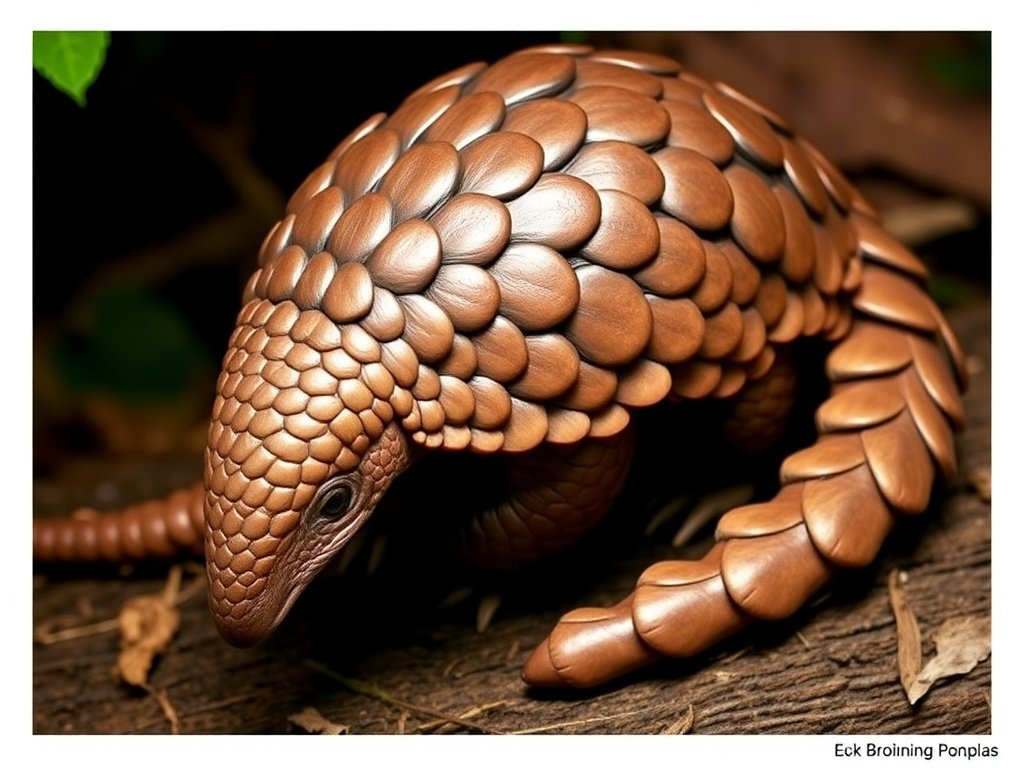
In the vast and varied animal kingdom, there exists a creature so unique that it looks like something from a prehistoric era. With a body covered in protective armor and a tongue longer than its entire body, the pangolin is a true marvel of evolution. However, this shy, nocturnal animal is currently trapped in a crisis. It holds the unfortunate title of being the world’s most trafficked mammal, pushed to the brink of extinction by relentless poaching and illegal trade .
This article delves deep into the fascinating world of pangolins, exploring their unique biology, their surprising role as ecosystem heroes, and the urgent global efforts to save them from disappearing forever.
What is a Pangolin? The Scaly Anteater
Often called “scaly anteaters,” pangolins are the only mammals in the world covered in scales . These scales, which make up about 20% of their body weight, are made of keratin—the same protein that forms human hair and fingernails . There are eight species of pangolin on the planet, four found in Asia and four in Africa . They vary in size and habitat; some, like the giant ground pangolin of Africa, are terrestrial and dig burrows, while others, like the black-bellied pangolin, are arboreal and use their prehensile tails to climb trees .
Physical Adaptations
Their entire existence is built around a diet of ants and termites. They are equipped with:
-
A Long, Sticky Tongue: A pangolin’s tongue is attached near its pelvis and last pair of ribs. When fully extended, it can be longer than the animal’s head and body, allowing it to reach deep into insect nests .
-
Powerful Claws: Their strong forefeet and sharp claws have a dual purpose: they are used to rip open concrete-hard termite mounds and to dig burrows for shelter .
-
Built-in Protection: When threatened, a pangolin’s primary defense is to curl into an impenetrable ball, using its sharp scales as armor. This instinct is so effective against predators like lions, but it tragically makes them easy for poachers to simply pick up off the ground . As a last resort, they can also emit a foul-smelling acid from glands near their tail, similar to a skunk .
Diet and Behavior
Pangolins are predominantly nocturnal and solitary. A single pangolin can consume up to 20,000 ants and termites in one night—that’s over 70 million insects a year . Since they have no teeth, they swallow small stones along with their food, which grind up the insects in their stomach, much like a bird’s gizzard .
The Pangolin’s Secret Role: Guardians of the Forest
Beyond their quirky appearance, pangolins are ecological heroes. Recent research has highlighted their critical role in maintaining healthy ecosystems . By consuming vast quantities of termites, they act as a natural form of pest control, preventing the destruction of vegetation.
Even more importantly, pangolins are ecosystem engineers. As they dig their burrows and forage for food, they turn over and aerate the soil. This process is vital for nutrient cycling, water infiltration, and plant growth . A single Chinese pangolin can dig between 50 to 100 burrows a year .
These burrows don’t just benefit the pangolin; they become critical shelters for dozens of other species. A recent study published in 2025 used cameras to monitor pangolin burrows in areas affected by wildfires. The footage revealed 35 different species—including leopard cats and king cobras—using the burrows for refuge. The same study found that burned areas with pangolin burrows recovered much faster, with 58 plant species flourishing where the pangolins had broken up the scorched soil . They are truly a keystone species for forest resilience.
The Crisis: Why Pangolins Are Facing Extinction
Despite their ecological importance and ancient defenses, pangolins cannot defend themselves against human greed. All eight species are threatened with extinction, with three listed as Critically Endangered (Chinese, Sunda, and Philippine pangolins) .
The Scale of Trafficking
The primary driver of their decline is illegal poaching and trade. Between 2000 and 2019, poachers trafficked an estimated 895,000 pangolins globally. More recent data from a 2025 report by the IUCN SSC Pangolin Specialist Group indicates that authorities seized products equivalent to over half a million pangolins just between 2016 and 2024. This likely represents just the tip of the iceberg, as authorities estimate that seizures account for only a fraction of the actual trade.
Demand for Scales and Meat
Two main factors fuel this demand, primarily in Asia:
Traditional Medicine: People erroneously believe pangolin scales possess medicinal properties, such as curing arthritis, improving blood circulation, or aiding lactation. No scientific evidence supports any of these claims; their scales consist simply of keratin, just like human nails.
Delicacy: Some cultures consider pangolin meat a high-end delicacy and status symbol, fetching exorbitant prices on the black market.
Habitat Loss
In addition to poaching, pangolins face significant pressure from habitat loss due to deforestation and agricultural expansion, which fragments their living spaces and reduces their food sources .
Global Conservation Efforts: Is There Hope?
The situation is dire, but a global movement is fighting to save the pangolin. In 2016, a landmark decision was made: all eight pangolin species were uplisted to Appendix I of CITES (the Convention on International Trade in Endangered Species), which prohibits all international commercial trade of the animals or their parts .
Despite this ban, trafficking continues, prompting calls for stronger action. A major report released in September 2025 emphasized that while legal frameworks exist, they have not stopped the trade . Conservationists are now focusing on:
-
Enhanced Enforcement: Using wildlife forensics to track traffickers and closing domestic markets that fuel demand .
-
Community Engagement: Involving local communities and indigenous peoples in conservation efforts, as they are vital to protecting pangolin populations on the front lines .
-
Science-Driven Demand Reduction: Moving beyond simple awareness campaigns to evidence-based strategies that actually change consumer behavior in demand hotspots .
There are glimmers of hope. The same 2025 report noted that pangolins have been rediscovered in areas where they were previously thought to be extinct, demonstrating their resilience when given a chance .
How You Can Help Protect Pangolins
You don’t have to be a scientist in the field to help these remarkable creatures. Your voice and choices matter.
-
Educate Yourself and Others: Share the facts. Let people know that pangolin scales are made of keratin—just like fingernails—and have no medicinal value. Dispel the myths that drive the demand .
-
Support Conservation Organizations: Groups like the IUCN Pangolin Specialist Group, the U.S. Fish & Wildlife Service, and frontline rescue operations in Africa and Asia are working tirelessly to protect pangolins. They need funding and support .
-
Be an Informed Consumer: Be aware of products derived from wildlife. If you suspect a product contains pangolin parts, report it to the authorities .
-
Advocate for Action: Encourage your elected officials to support international conservation funding and strong wildlife protection laws .
Conclusion
The pangolin is a testament to nature’s creativity—a walking pinecone with a superhero’s tongue and a gardener’s touch. They have patrolled our planet for millennia, keeping forests healthy and insect populations in check. Now, they need us to return the favor. By understanding their plight and raising our voices against wildlife trafficking, we can ensure that these “guardians of the forest” continue to roll through the undergrowth for generations to come .
Frequently Asked Questions About Pangolins
1. Are pangolins reptiles?
No, pangolins are mammals. Scales cover their bodies, but they give birth to live young, and mothers nurse their babies with milk. Keratin—the same material as human hair and fingernails—forms their scales, not reptile scales.
2. Why are pangolins so endangered?
Pangolins are the most trafficked mammal in the world primarily because demand drives their poaching. People in some countries consider their meat a delicacy, and others use their scales in traditional medicine despite no scientific evidence of medicinal value. Habitat loss also contributes to their decline.
3. Can pangolins roll into a ball?
Yes! This is their main defense mechanism. When threatened, pangolins have the unique ability to curl up into a tight, impenetrable ball. Their overlapping scales act as armor, protecting their soft underside. This works well against predators, but unfortunately makes it easy for poachers to pick them up.
4. What do pangolins eat?
Pangolins are insectivores (or myrmecophages), meaning they eat only insects. Their diet consists almost exclusively of ants and termites. They use their long, sticky tongues to lap them up from nests.
5. Where do pangolins live?
There are eight species of pangolin. Four species are found in Asia (India, China, Southeast Asia) and four species are found in Africa (south of the Sahara). They live in a variety of habitats, including forests, savannas, and grasslands.
6. How many pangolins are left in the wild?
Exact numbers are difficult to determine because they are solitary and secretive. However, scientists estimate that all eight species are threatened, with the Sunda, Chinese, and Philippine pangolins listed as Critically Endangered. Populations have declined drastically due to poaching.
7. Do pangolin scales have medicinal properties?
No. Scientific analysis has proven that pangolin scales are made of keratin, offering no more medicinal benefit than chewing on your own fingernails. Their use is based on superstition and outdated traditional beliefs.