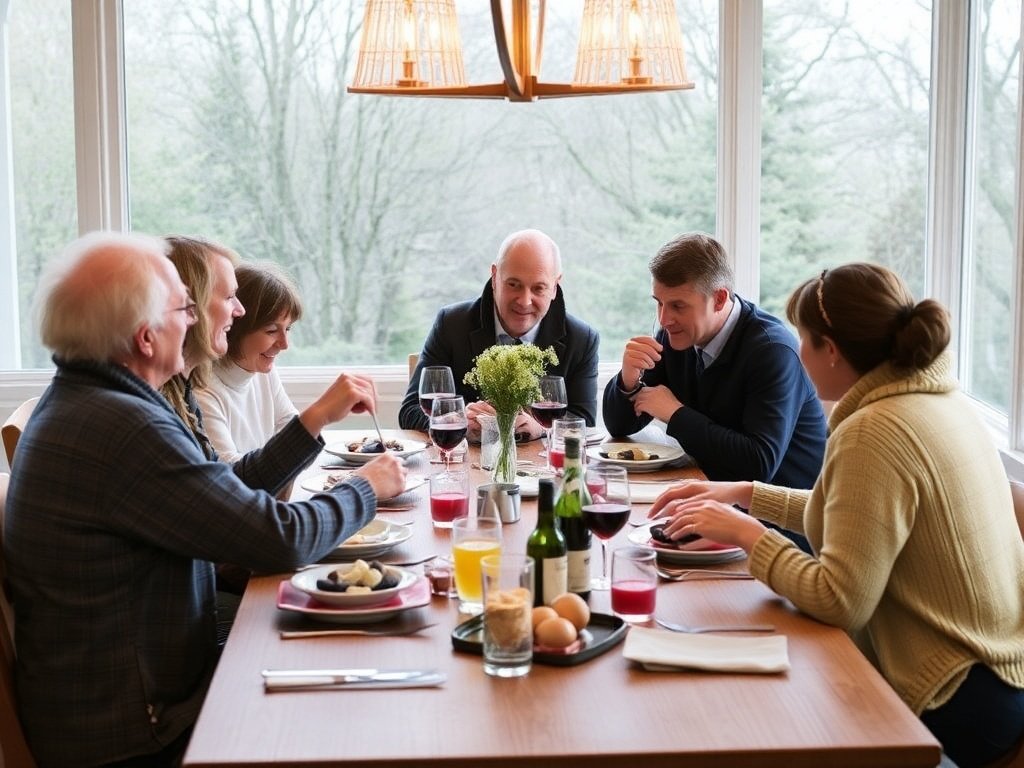
Imagine receiving an invitation to lunch from a Swedish colleague or friend. The setting is likely a modest, quiet restaurant, the conversation is a balanced mix of professional discussion and light personal topics, and when the bill arrives, your host simply says, “I’ll take this.” There is no argument, no dramatic gesture, and no sense of debt or obligation—just a smooth, courteous end to a purposeful meeting. This is the essence of bjudlunch.
Bjudlunch is more than just a free meal; it is a structured social and professional gesture embedded in Swedish and broader Nordic culture. It is an act of invitation that signifies appreciation, initiates collaboration, and strengthens relationships without the need for extravagance. This article delves into the meaning, traditions, etiquette, and modern relevance of this unique custom.
Understanding the Meaning of Bjudlunch
The Literal Translation and Deeper Significance
The word bjudlunch is a compound of two Swedish words: bjuda, meaning “to invite” or “to treat,” and lunch, the midday meal. On the surface, it simply means a lunch where one person treats another. However, in practice, the concept carries significant cultural weight. A bjudlunch implies that the host initiated the meeting, values the relationship, and takes financial responsibility for the meal in a professional and unassuming way.
Key Characteristics
A bjudlunch is defined by several core characteristics that distinguish it from a regular lunch or a business dinner in other cultures:
-
Purposeful Invitation: It is rarely a spontaneous event. The invitation has a purpose, whether it’s to discuss a business partnership, welcome a new colleague, or thank a friend.
-
Host Pays: The person who extends the invitation is expected to pay for the meal.
-
Modest Setting: The focus is on conversation and connection, not on lavish displays. Meals typically take place in mid-range restaurants, cafés, or workplace cafeterias, not high-end luxury venues.
-
Casual yet Intentional Atmosphere: The environment is relaxed to foster open dialogue, but there is usually an underlying agenda or topic for discussion.
The Two Faces of Bjudlunch: Social and Professional Contexts
The tradition of bjudlunch manifests differently depending on the setting, adapting to both personal and professional needs.
Bjudlunch as a Social and Family Tradition
In its original form, bjudlunch is a warm, social tradition rooted in Swedish hospitality. It is about bringing friends and family together to share a meal, celebrate connections, and enjoy each other’s company.
-
Historical Roots: The tradition has deep roots in Swedish culture, tracing back to the 19th and early 20th centuries as a way for communities to bond over food. It was a practice born from communal farming and evolved into a cherished way to celebrate milestones, holidays, or simply the joy of togetherness.
-
The Social Gathering: Today, a social bjudlunch might involve a spread of traditional Swedish dishes. The spread is often a buffet, allowing guests to mingle and choose their favorites.
-
Traditional Foods: A social bjudlunch is a feast for the senses. Common dishes include:
-
Pickled Herring (inlagd sill): A staple symbolizing hospitality.
-
Swedish Meatballs (köttbullar): Served with lingonberry sauce and mashed potatoes.
-
Open-faced Sandwiches (smörgåsar): Topped with ingredients like shrimp, egg, or cheese.
-
Crispbread (knäckebröd): A versatile accompaniment to meals.
-
Princess Cake (prinsesstårta): A classic dessert for celebrations.
-
-
Modern Evolution: While the essence remains, modern social bjudlunches have evolved to include global influences, vegetarian options, and themed decorations, reflecting the personal style of the host.
Bjudlunch in Nordic Business Culture
In the professional realm, bjudlunch takes on a more structured role. It is a key tool for networking, building trust, and conducting business in a less formal environment.
-
A Professional Gesture: In Nordic business culture, a bjudlunch is common when discussing partnerships, meeting potential clients, recruiting senior-level candidates, or consulting. It is a gesture that signals, “I value your time,” by compensating the guest for their lunch hour.
-
Structured and Efficient: Unlike lengthy business dinners in some cultures, a bjudlunch is typically time-efficient, lasting between 60 to 90 minutes. The conversation gets down to business quickly, with limited small talk.
-
Equality and Modesty: The practice reflects core Nordic values of equality and transparency. A junior consultant can host a senior executive if they initiated the meeting, and the act of paying does not imply dominance. The choice of a modest restaurant reinforces that the goal is conversation, not impressing with wealth.
Bjudlunch Etiquette: A Guide for Hosts and Guests
Understanding the unwritten rules of bjudlunch is crucial for navigating it smoothly, whether you are a visitor or a local.
For the Host
-
Extend a Clear Invitation: Be explicit in your invitation, indicating you would like to treat them to lunch.
-
Choose a Convenient Location: Select a restaurant or café that is comfortable, quiet enough for conversation, and convenient for your guest.
-
Handle the Bill Quietly: When the bill arrives, simply take it or say, “I’ll take this.” Avoid making a big show of paying.
-
Maintain a Clear Agenda: Come prepared with discussion points to make the most of the time.
For the Guest
-
Offer to Pay Once: It is polite to offer to split the bill once, but do not insist. Accept the host’s gesture gracefully.
-
Avoid Ordering the Most Expensive Item: Show consideration by choosing a moderately priced meal.
-
Be Punctual and Prepared: Arrive on time and be ready to discuss the purpose of the meeting.
-
Express Gratitude: A simple “thank you” (“tack så mycket”) at the table and a follow-up email afterward is a common and appreciated practice.
Do”s and Don”ts
| Do”s | Don”ts |
|---|---|
| Do arrive on time to show respect for your host”s schedule. | Don”t engage in a long argument over who pays the bill. |
| Do engage in balanced conversation, blending business with light personal topics. | Don”t choose a lavish or overly expensive restaurant if you are the host. |
| Do focus on the discussion and the purpose of the meeting. | Don”t view the meal as creating a sense of debt or obligation. |
Cultural Values Reflected in Bjudlunch
Bjudlunch is a mirror reflecting the broader cultural values of Sweden and its neighbors.
-
Equality and Low Hierarchy: The practice reinforces that relationships are built on mutual respect, not power dynamics. The act of paying is tied to the invitation, not to one’s status.
-
Modesty and Lagom: The concept of lagom—meaning “just the right amount”—is central. A bjudlunch is about “keeping things simple, fair, and purposeful,” avoiding any hint of excess.
-
Trust and Transparency: Sharing a meal in a relaxed setting is a fundamental way to build trust. It signals openness and a genuine interest in the other party, whether they are a friend or a potential business partner.
Modern Relevance and Global Adaptation
In an increasingly digital world, the bjudlunch tradition remains resilient and has even adapted to modern lifestyles. The core idea of connecting over a shared meal is a powerful counterbalance to remote work and screen-based communication.
-
Virtual Bjudlunches: With the rise of remote work, teams have adapted by hosting virtual lunches over video calls, sometimes with company-funded meal deliveries to maintain camaraderie.
-
Employer-Sponsored Programs: Many Swedish companies formally encourage team lunches to boost morale, improve communication, and strengthen team dynamics.
-
Global Application: While the term is Swedish, the concept of treating someone to a sincere, focused meal is universally understood. Adopting the bjudlunch mindset—focusing on equality, comfort, and genuine connection—can be a powerful tool for international professionals and anyone looking to build stronger relationships.
Conclusion
Bjudlunch is far more than its literal translation suggests. It is a nuanced and cherished tradition that encapsulates the spirit of Swedish culture. Whether it is a social gathering of friends and family around a table laden with herring and meatballs, or a purposeful meeting between colleagues in a quiet café, the essence remains the same: it is about connection.
At its heart, a bjudlunch is a simple yet profound gesture of generosity and respect. It is an invitation to pause, share a meal, and invest in the relationships that enrich both our personal and professional lives. In a fast-paced world, taking the time for a bjudlunch is a reminder that the best connections are often forged not in boardrooms, but over a shared meal, one thoughtful bite at a time.
Frequently Asked Questions About Bjudlunch
To help you fully understand and navigate this Swedish tradition, here are answers to some of the most common questions about bjudlunch.
1. What is the difference between “bjudlunch” and just “going to lunch”?
The key difference lies in the intent and the invitation. “Going to lunch” is typically a casual, often spontaneous agreement where everyone expects to pay for their own meal (often referred to as “splitting the bill” or “going Dutch”). A bjudlunch, however, is initiated by one person (the host) with a specific purpose in mind. The host explicitly invites the guest and intends to pay for the meal as a professional or social gesture.
2. If someone invites me to a bjudlunch, should I offer to pay?
Yes, it is polite to offer once. You can simply say, “Shall we split the bill?” or “Let me get this.” However, if the host insists on paying (which they will, as per the tradition), you should graciously accept without further argument. A simple “Tack så mycket” (Thank you very much) is the correct response.
3. Is it rude to order the most expensive thing on the menu?
Generally, yes. A bjudlunch is rooted in the principle of lagom (moderation). Ordering the most expensive item, like a steak or a bottle of wine, can be seen as taking advantage of the host’s generosity. It is safer to choose a mid-priced dish, similar to what the host orders.
4. Is a bjudlunch always for business, or can it be for friends?
It can be both! While it is a very common and structured tool in business culture for networking and discussions, it also has deep roots as a social tradition. Friends and family might host a bjudlunch to celebrate a birthday, welcome someone home, or simply enjoy a relaxing afternoon together. The key difference is the level of formality.
5. What kind of food is typically served at a bjudlunch?
This depends on the context.
-
Professional/Modern: Usually takes place at a standard lunch restaurant, a café, or a workplace cafeteria. The food is good but not extravagant.
-
Social/Traditional: At home, a social bjudlunch might feature a buffet of classic Swedish dishes like pickled herring, meatballs with lingonberries, potato salad, crispbread, and perhaps a Princess Cake for dessert.
6. How long does a typical bjudlunch last?
In a professional context, a bjudlunch is quite efficient. It typically lasts between 60 and 90 minutes. This allows enough time for a meal and focused conversation without taking up the entire workday. A social bjudlunch at someone’s home on the weekend could, of course, last much longer.
7. What is the difference between a bjudlunch and a “fika”?
This is a common point of confusion. While both are central to Swedish culture, they are distinct.
-
Fika is a coffee and cake break. It is a shorter, more frequent social ritual focused on relaxation and casual connection.
-
Bjudlunch is a full meal (lunch) with a more specific purpose. It involves a more structured invitation and, in a business context, a clearer agenda.
8. Is the bjudlunch tradition common in other Nordic countries?
Yes, the core concept is very common across Scandinavia. While the specific word “bjudlunch” is Swedish, the practice of a purposeful, hosted lunch is widespread in Norway, Denmark, and Finland as well. The underlying cultural values of modesty, punctuality, and using a meal to build trust are shared across the region.
9. Do I need to send a thank-you note after a business bjudlunch?
While not strictly mandatory, it is a highly regarded and common professional courtesy. Sending a brief email later that day or the next morning, thanking the host for the lunch and the conversation, is an excellent way to reinforce the positive impression and strengthen the professional relationship.